

Recent work
A selection of the research and evaluations I’ve had the privilege to contribute to or lead over the years, each one shaped by the people and contexts it came from.
None of it would have been possible without the collaboration of colleagues, partners, and participants around the world who trusted me with their time, their knowledge, and their stories .

The state of pensions and social protection for Jordan’s elderly
This study examines how Jordan’s pension and social assistance systems are affecting older people’s lives amid rapid demographic change, gender gaps in pension coverage, and rising living costs. Drawing on 16 interviews with elderly individuals and policymakers, it finds that even long-term contributors struggle to meet basic needs under current benefit levels.
Women’s employment and entrepreneurship in MENA’s green economy transition
This white paper draws together insights shared during a conference exploring women’s employment and entrepreneurship opportunities within the MENA region’s green economy transition. Bringing together expert perspectives, it highlights key challenges, opportunities, and recommendations for advancing women’s economic participation as the region shifts toward more sustainable and inclusive growth.
Sustaining social protection in conflict-affected contexts: Insights from Iraq, Syria, and Yemen
This paper examines whether and how social protection systems (cash transfers, food assistance, and other safety nets) can be sustained amid conflict. Drawing on experiences from Iraq and Syria, with supplementary insights from Yemen, it explores how ongoing violence and instability complicate design and delivery, offering key findings and recommendations.
Sustaining social protection capacities amid violent conflict and regime change
Part of the BASIC Research programme series on social protection in conflict, this paper examines what happens to delivery capacities during violent conflict and regime change. It argues that technical investments (e.g. management information systems) are necessary but insufficient. Sustained delivery also requires recognizing ideational drivers of institutional approaches, and investing in the frontline workers who deliver services at great personal risk.
Social protection in Syria after Assad: What happened next
Building on BASIC Research’s work on social protection sustainability in Syria (2011–late 2024), this briefing note follows up on a February 2025 briefing that outlined the dismantling of subsidies, bank account freezes, and limited cash transfer/pension payments after Assad’s fall. It examines developments in the following months and identifies spaces for social protection reform and rehabilitation.
Sustaining social protection in Syria’s conflict, 2011–2024
Part of a series on social protection in conflict, this paper examines Syria as a case study, assessing whether programs (such as consumption subsidies, pensions, and the National Social Aid Fund) continued operating through economic crisis and conflict, up to the Assad regime’s fall. It finds that sustained programs were those with established systems, entrenched in the social contract, and tied to development goals.
Research on social protection in Iraq
This working paper is one of a series exploring if and how social protection is sustained in situations of conflict. Taking Iraq as a country case study, and focusing especially on areas affected by the territorial expansion of the Islamic State of Iraq and al-Sham from 2015, it assesses whether existing social protection (especially the Public Distribution System, Social Safety Net, Cash Transfer Program, and programs for people with disabilities) were able to continue operations in situations of economic, conflict, and displacement-related crises.
Mid-term evaluation: Integrated child protection and access to justice project (Terre des hommes)
This mid-term evaluation assesses Tdh’s project integrating Child Protection and Access to Justice, supporting Jordan’s Juvenile Law and alternatives to detention. The evaluation included a capitalization event and a dedicated study on partnership practices and localization strategy, offering recommendations to strengthen sustainability and guide the project’s remaining implementation period.
Social protection in Syria: A rapid assessment after the fall of Assad
Following the fall of the Bashar al-Assad regime on 8 December 2024 and the establishment of an interim government led by Hayat Tahrir al-Sham (HTS), Syria has entered a period of unprecedented transition. As part of the IDS-led BASIC Research programme, Proximity International conducted a rapid assessment of how social protection is evolving across the country, drawing on situational reports from ten Syrian researchers spanning nine governorates.
Research on World Vision’s Nexus approach
In partnership with SMART Capabilities, we conducted a comprehensive mixed-methods study on World Vision’s Nexus approach. This research combined perception surveys with aid recipients and in-depth interviews with staff and community members to explore the implementation of this pilot approach. Our findings highlight both the challenges faced and the good practices that have emerged, providing valuable insights into the operationalization of this Nexus approach.
Final evaluation: Feminist response in action through community mobilization for access to SGBV services
This final evaluation assesses a three-year AWO project (2021–2024), funded by the UN Trust Fund, aimed at improving GBV prevention and response services for vulnerable women and girls in Jordan’s Irbid and Mafraq governorates. Using a mixed-methods approach (409 surveys, 16 FGDs, and 8 KIIs), it draws lessons to inform future programming.
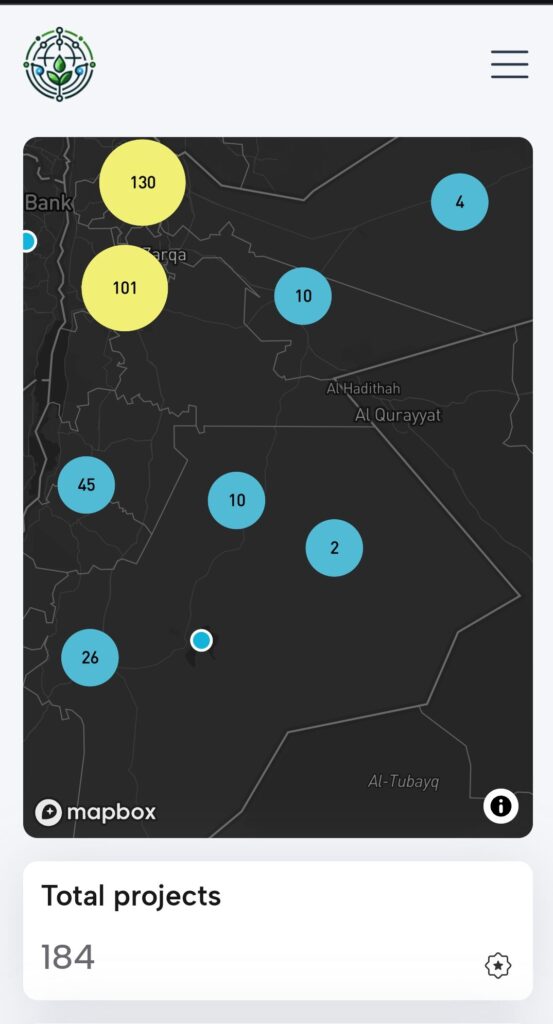
Tahammul platform
We contributed to the development of the Tahammul platform, which aims to foster climate resilience through comprehensive stakeholder mapping and engagement. In this effort, we consulted with over 30 different NGOs, private sector organizations, and associations to enrich the mapping database.
Analysis of social accountability in Yemen
Based on a mid-term assessment of social accountability projects in Yemen, this report provides an in-depth analysis of the practices and lessons learned from project implementation. It aims to inform international and national development partners on how to support local authorities in addressing citizens’ demands and concerns.
Research on coordination and cooperation in Hadhramaut
This study offers a comprehensive overview of current horizontal and vertical cooperation and coordination mechanisms among local authorities and public service providers in Hadhramaut. It examines best practices and lessons learned, based on both desk research and key-informant interviews with local governance officials, civil society members, and private sector representatives.
Research on women participation in local governance in Yemen
This study provides an assessment of women’s participation in local governance in Yemen. By conducting a desk review and collecting key informant interviews, the report maps both the formal (de jure) and actual (de facto) roles of women in local governance. It also evaluates the challenges and opportunities for enhancing women’s meaningful engagement in local governance.